
Verdict: Zuckerberg building an AI agent to replace CEO functions isn’t a stunt — it’s the logical endpoint of everything Meta’s been doing with AI agents since 2025. And if you think this is just tech-bro hubris, you’re not paying attention to what AI agents can already do today.
Mark Zuckerberg wants to build an AI system capable of handling the work of a CEO. Not all of it — not the keynote speeches or the congressional hearings — but the operational backbone: resource allocation, strategic prioritisation, hiring decisions, product roadmaps, and the thousand daily micro-decisions that keep a 70,000-person company moving.
Here’s the thing nobody wants to say out loud: most of that work is pattern matching. And pattern matching is exactly what AI agents are obscenely good at.
What Zuckerberg Actually Said
Meta’s been telegraphing this move for over a year. In early 2025, Zuckerberg announced Meta would bring in AI to replace mid-level software engineers — not as a cost-cutting exercise, but because AI agents could handle the coordination, code review, and project management that mid-level roles typically own.
Then he went further. Zuckerberg described building AI agents that could handle increasingly senior functions: setting priorities across teams, allocating engineering resources, making product decisions based on real-time data. By late 2025, Meta was spending over $65 billion on AI infrastructure — the largest capex commitment of any tech company that year. The natural ceiling of that trajectory? The CEO role itself.
He’s not saying he wants to retire to a Hawaiian ranch (though, you know, he already has one). He’s saying the operational CEO — the one who reads dashboards, approves headcount, and decides which features ship — is a role that AI can systematically outperform a human at.
And he’s probably right.
Why CEO Work Is Surprisingly Automatable
Here’s what most people get wrong about the CEO role. Zuckerberg himself told Meta employees to use AI to “go 5X faster” — framing it not as cost-cutting but as a fundamental shift in how work gets done. They picture the visionary — Steve Jobs holding up the iPhone, Elon tweeting chaos into existence. That’s maybe 5% of the job.
The other 95% is:
- Resource allocation — which teams get headcount, which projects get budget
- Prioritisation — what ships this quarter vs next quarter vs never
- Information synthesis — reading reports from twelve departments and making a call
- Approval chains — reviewing proposals, signing off on strategy docs, unblocking decisions
- Performance management — who’s underperforming, which teams need restructuring
Every single one of those is a data-driven decision that benefits from processing more information, faster, with less cognitive bias. That’s not a human superpower — that’s an AI superpower.
An AI agent with access to Meta’s internal data — real-time revenue, engagement metrics, engineering velocity, competitive intelligence — could make resource allocation decisions that are objectively better than a human CEO reviewing a summary deck once a week.
The Parts That Can’t Be Automated (Yet)

Let’s be honest about what AI still can’t do. The CEO role has a massive human-facing component that no agent is replacing any time soon:
- Board management — convincing a room of investors requires human trust
- Crisis leadership — when things go sideways, people need a person to rally behind
- Public narrative — media appearances, congressional testimony, keynote storytelling
- Culture setting — the CEO as symbolic leader shapes how people feel about coming to work
- Ethical judgement calls — the genuinely novel situations where there’s no data to pattern-match against
Zuckerberg isn’t trying to automate these. He’s trying to automate everything else so the human CEO can focus exclusively on the parts that require being human.
That’s not replacement. That’s amplification. And it’s the same pattern we’ve seen with every AI agent workflow that actually works.
This Is Just Agent Architecture at Scale
If you’ve been building with AI agents — and if you’re reading Clord, you probably have — Zuckerberg’s vision is just enterprise-grade agent architecture applied to the C-suite.
Think about it:
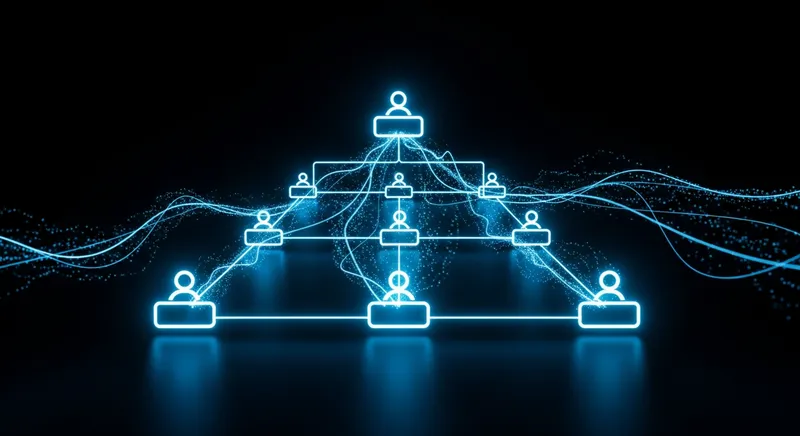
- Specialist agents handle domain-specific tasks (finance agent, product agent, HR agent)
- An orchestrator synthesises inputs from specialists and makes routing decisions
- Human-in-the-loop for high-stakes, irreversible, or novel decisions
- Continuous feedback from real-world outcomes to improve future decisions
That’s literally how multi-agent systems work in code. Meta is just running it on an org chart instead of a codebase.

The companies already doing this at smaller scale aren’t making headlines. Klarna replaced 700 customer service agents with AI, doing the work of all of them in their first month. Duolingo went “AI-first” and cut contract translators as part of a company-wide shift announced in their Q1 2025 earnings. Amazon uses AI for warehouse logistics decisions that used to require regional managers. The CEO layer is just the next rung up.
Why Most Companies Will Follow (Slowly)
Here’s our actual take: within five years, every Fortune 500 company will have an AI system handling at least 40% of what the CEO currently does. Not because they want to — because the companies that do it first will make better decisions, faster.
The competitive pressure is the quiet part. If Meta’s AI-assisted CEO is making resource allocation decisions in real-time while your CEO is reviewing last month’s numbers in a Monday morning meeting, you’re already behind.
The pattern will look like this:
- 2025-2026 — AI handles data synthesis and recommendation (where we are now)
- 2026-2027 — AI makes routine operational decisions autonomously with human oversight
- 2028+ — AI handles strategic planning with human veto power on major decisions
We’re not predicting AI CEOs replacing humans entirely. We’re predicting a hybrid model where the AI does the operational heavy lifting and the human handles the parts that require trust, judgement, and a face.
What This Means for Developers
If you’re building AI agents today, pay attention to what Meta is signalling. The value isn’t in chatbots or content generation — it’s in decision-making agents that operate on real business data.
The skills that matter:
- Agent orchestration — building systems where multiple specialist agents collaborate
- Data pipeline design — agents are only as good as the data they can access
- Human-in-the-loop patterns — knowing when to escalate vs when to act autonomously
- Evaluation frameworks — how do you measure whether an AI decision was better than a human one?
These aren’t theoretical skills. They’re the engineering backbone of what Zuckerberg is building at Meta scale — and what every company will need at their own scale within a few years.
The Bottom Line
Zuckerberg building an AI agent to replace CEO functions sounds like a headline engineered for clicks. But underneath the hype, the logic is sound: most executive work is data-driven decision-making, and AI agents are already better at that than humans in constrained domains.
The move isn’t crazy. It’s inevitable. The only question is whether Meta gets there first or whether a leaner, faster company beats them to it.
The real hot take? The AI CEO won’t replace Mark Zuckerberg. It’ll replace the thousands of mid-level managers who currently exist to translate CEO decisions into action. That’s where the real disruption lives — and nobody’s talking about it.
Building AI agents that actually make decisions? We cover the tools and patterns that ship. Follow Clord for the takes nobody else will give you.