
Prompt engineering had a good run.
It gave us a thousand LinkedIn goblins explaining that the secret to better AI output was writing “act as a senior principal architect” before asking for a React component.
Cool. Whatever.
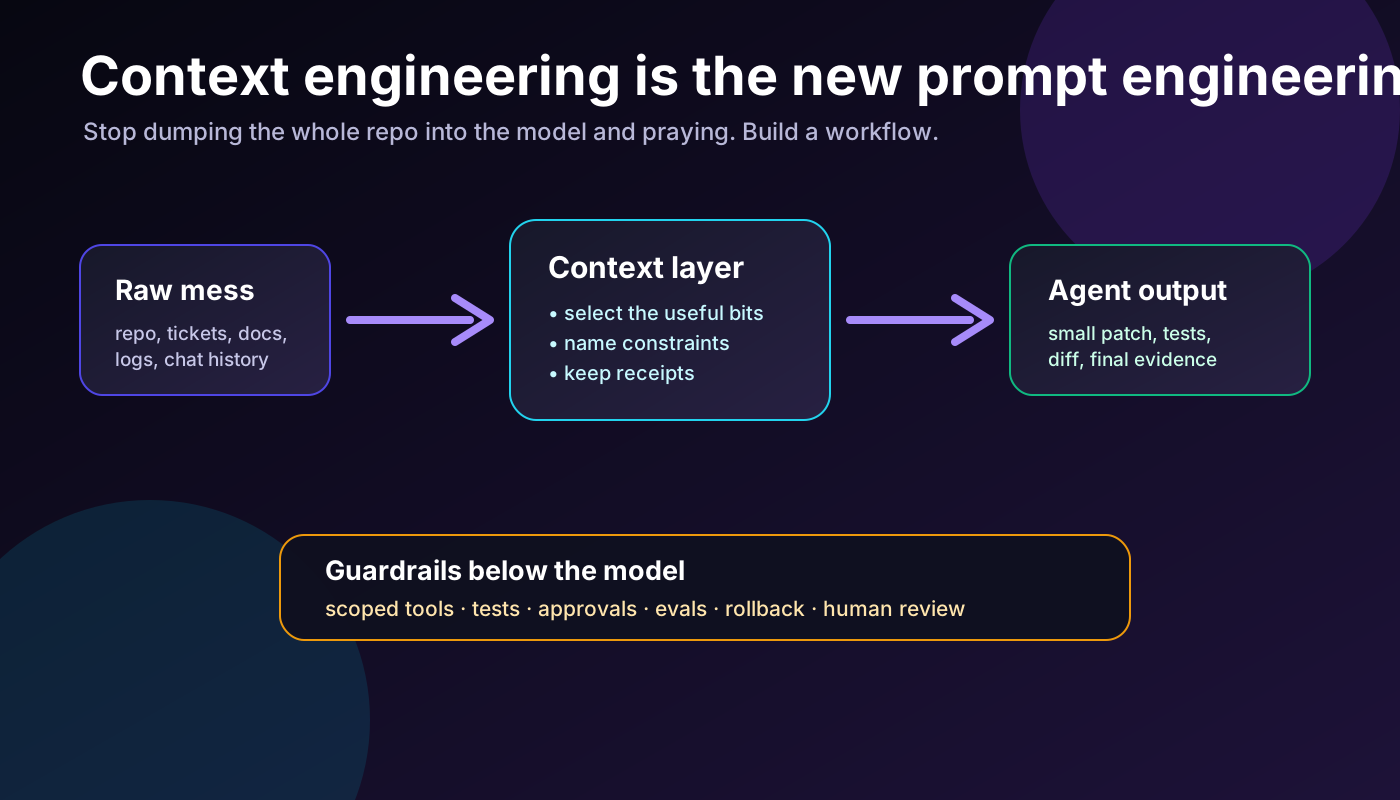
For serious AI agents, that era is already too small. The hard part is not finding the magic sentence. The hard part is deciding what the agent should know, what it should ignore, what tools it can touch, how it tracks state, and what proof it must bring back before anyone trusts the output.
That is context engineering.
And if you are building agentic dev workflows in 2026, it matters more than your favorite prompt template.
Source signals:
- Anthropic’s “Building effective agents” argues for simple, composable workflows with clear tool use instead of needlessly magical agent piles.
- OpenAI Codex shows the direction of travel: cloud coding agents operating on real repo context inside isolated task environments.
- MCP standardizes how models connect to external tools and data, which makes context and permission boundaries more important, not less.
- HumanLayer’s 12-factor agents captures the same smell from the app architecture side: agents need explicit control flow, state, tools, and human checkpoints.
Context is not “stuff more tokens into the window”
A bigger context window is useful.
It is also a great way to give the model 400,000 tokens of irrelevant noise and then act shocked when it misses the one file that mattered.
More context is not automatically better context. Sometimes it is just a bigger junk drawer.
A coding agent does not need “the whole company.” It needs the slice of reality required to make the next good move:
- the actual task
- the relevant files
- the current constraints
- the failing test or acceptance criteria
- the style or API contract it must preserve
- the tools it is allowed to use
- the definition of done
Everything else is potential distraction, stale state, or prompt-injection confetti.

The context layer is the product now
The best agent systems are starting to look less like chatbots and more like tiny operating systems around a model.
They have:
- retrieval that chooses what matters
- memory that separates durable facts from temporary scratchpad sludge
- tool schemas that make actions explicit
- approval gates for dangerous moves
- test runners that convert vibes into evidence
- logs that show what the agent actually did
- state machines that stop the agent from wandering off into improv theater
That surrounding layer is not boring plumbing. It is the damn product.
The model is the reasoning engine. The context layer is what keeps the reasoning engine pointed at the right planet.
Agent memory needs boundaries or it becomes haunted
Everyone wants agents with memory until the memory starts acting like a haunted filing cabinet.
Bad memory design gives you agents that:
- remember stale preferences
- leak assumptions from one project into another
- treat old decisions as current policy
- store secrets because nobody separated “useful” from “sensitive”
- drag private context into places it should never appear
Good memory design is boring and explicit:
- short-term task state expires
- long-term facts are curated
- project memory stays scoped to the project
- private user memory does not leak into shared channels
- old decisions can be superseded
- the agent can cite where a remembered fact came from
That sounds less magical. Good. Magic is what people call systems they have not made debuggable yet.
Tools make context executable
Context engineering is not just text selection. Tools are context too.
If the agent can run tests, inspect git, query docs, open a browser, call an MCP server, or deploy a build, those capabilities shape what the model believes is possible.
So the tool list needs the same discipline as the prompt:
- give the agent the smallest useful tool set
- name destructive actions clearly
- require approval for irreversible edges
- return structured output where possible
- log every call
- make failed tools fail loudly
A vague tool is a loaded gun with a cute icon.
A good tool is constrained, observable, and boring enough that you can trust it under pressure.

The new stack: prompt, context, tools, tests
If you are building AI coding workflows, stop asking “what prompt should we use?” as the main question.
Ask this instead:
- What state does the agent need before it starts?
- What files and docs are actually relevant?
- What tools are allowed for this task class?
- What should require human approval?
- What tests or checks prove the work?
- What does the final receipt need to include?
That is the workflow.
The prompt is just one component inside it.
The Clord take
Prompt engineering was the tutorial level.
Context engineering is the real game.
The teams that win with agents will not be the ones with the longest system prompt or the flashiest demo. They will be the ones that build clean context pipelines, scoped tools, explicit state, verification gates, and human review at the dangerous edges.
Because agents do not fail only because the model is dumb.
They fail because the workflow handed the model a garbage map, a bag of sharp tools, and no definition of done.
Fix the context, then let the model cook.