
LatestAIclaude
Claude Code Verification Loops: Add Checks, Not Reviewers
Claude Code verification loops, straight from Anthropic's own team, plus fresh Harvard data on the AI code review bottleneck. Here's the cheap half worth copying.
·10 min read


All posts tagged "dev tools" on Clord.
39 posts
Claude Code verification loops, straight from Anthropic's own team, plus fresh Harvard data on the AI code review bottleneck. Here's the cheap half worth copying.
If your agent can publish a technical take but cannot show which current source supports each important claim, you did not build a research workflow. You built confident plagiarism-adjacent fog with a deploy hook.
If your AI blog workflow can publish on a timer but cannot reject stale sources, lazy angles, broken media, and generic sludge, you did not build a content engine. You built a slop cannon with CI logs.
Multi-agent workflows are only useful when one agent can hand work to another without smuggling mystery state, stale assumptions, and vague permission soup. Handoffs need typed contracts, receipts, and verification gates.
Production agents are becoming little runtime systems with tools, memory, sandboxes, approvals, and side effects. If the runtime cannot decide allow, block, challenge, escalate, or roll back before the tool fires, you built a vibes cannon.
AI agents are getting close enough to production systems that secrets cannot live as ambient confetti in prompts, terminals, logs, and MCP configs. Give agents scoped brokers, short leases, canary secrets, audit receipts, and hard revocation paths.
Agents are starting to install tools, MCP servers, browser skills, prompts, and little automation packages like dependencies. That means registries need scanners, quarantine, provenance, and boring security gates before one weird package gets hands on your workflow.
Browser agents are finally getting useful: they can read pages, click through flows, fill forms, and drive SaaS like a junior operator. That also means one bad instruction can become a real-world action. The fix is not panic. It is tripwires.
AI agents are asking humans to approve tool calls, shell commands, PRs, deploys, data access, and workflow actions. If approval is just a scary modal with a yes button, you are not controlling risk. You are laundering it through a tired human.
Leaderboards tell you which agent looked good on someone else’s maze. Shadow traffic tells you whether your agent survives your users, your tools, your repo, your latency budget, and your weird edge cases without lighting the place on fire.
Coding agents are producing diffs, summaries, screenshots, logs, test output, deploy plans, and whole pull requests. If you cannot prove where an artifact came from, what tools touched it, and which policy cleared it, do not ship the damn thing.
Coding agents are becoming cheap enough to run in parallel and capable enough to create real collisions. If your product lets every agent task launch, retry, delegate, and wait forever, you do not have automation — you have an airport with no tower.
Coding agents are getting good enough to change real systems and slippery enough to break them in weird ways. If your agent workflow cannot prove the undo path before merge, you are not shipping automation — you are shipping a dare.
Agents are starting to touch repos, browsers, SaaS tools, MCP servers, and production-ish systems. If your permission model is still a static token in an env var, you are handing the intern a master key and calling it automation.
Agents can loop, retry, call tools, fan out, and quietly turn a tiny task into a stupid bill. If you are shipping autonomous workflows without budgets, meters, and hard stops, you are not being ambitious — you are being sloppy.
Coding agents are starting to research repos, plan changes, call tools, open branches, and hand humans a pull request. If the PR only shows the final diff, your review process is missing the damn cockpit recorder.
MCP servers are turning agent tools into installable infrastructure. That is useful as hell — and exactly why teams need package-manager discipline before every agent gets a random toolbox with production keys.
AI agents do not just return text anymore. They call tools, read memory, edit repos, request approvals, and trigger workflows. If you cannot trace that mess after the fact, you are not operating agents — you are hoping really hard.
Repo-aware coding agents are useful because they can act. That also means every serious agent workflow needs clean sandboxes, scoped tools, receipts, and review gates before it touches real branches.
Codex, Gemini CLI, MCP-heavy workflows, and repo-aware agents are turning terminals into delegated work surfaces. That is powerful as hell — and reckless if you do not wrap it with permissions, receipts, and rollback.
The agent stack is moving too fast to worship any one framework. The durable layer is the boring contract: tools, context, memory, evals, permissions, and receipts. Pin that, or get dragged by the churn.
Long-term memory sounds like the feature that makes agents useful. It is also how you ship haunted global state unless you scope it, expire it, verify it, and make the agent show receipts.
Prompt engineering was cute. Agent workflows need context engineering: smaller inputs, explicit state, scoped tools, tests, and receipts. Otherwise your agent is just improvising in a fog machine.
MCP servers, browser agents, shell access, and cloud coding sandboxes are not cute plugin toys anymore. If an agent can touch real data or deploy code, treat its tools like production infrastructure.
The next agent quality jump is not another prettier leaderboard. It is boring, brutal verification: smaller context, explicit invariants, compiler-grade checks, and humans who stop treating green text as proof.
Codegraph, GraphBit, BenchJack, and frontier-model CTF drama all point at the same ugly truth: agent progress is real, but our evals and workflows are way too easy to game.
Claude Code, Codex, Cursor, Gemini CLI, Copilot, Devin, OpenHands, Augment, Aider, and Cline all have a lane. The real 2026 takeaway: benchmarks are messy, scaffolds matter, and your workflow decides who actually wins.
Spec Kit, state-machine guardrails, personal AI infrastructure, and domain skill packs are all pointing at the same boringly useful truth: agents ship better when the workflow is explicit.
Tiny tool-calling models, visual state machines, and agent analytics are all pointing at the same 2026 trend: production agents need rails, receipts, and evals more than bigger vibes.

Google just dropped Gemma 4 with Apache 2.0 licensing — and for builders, that changes everything about what you can actually ship.
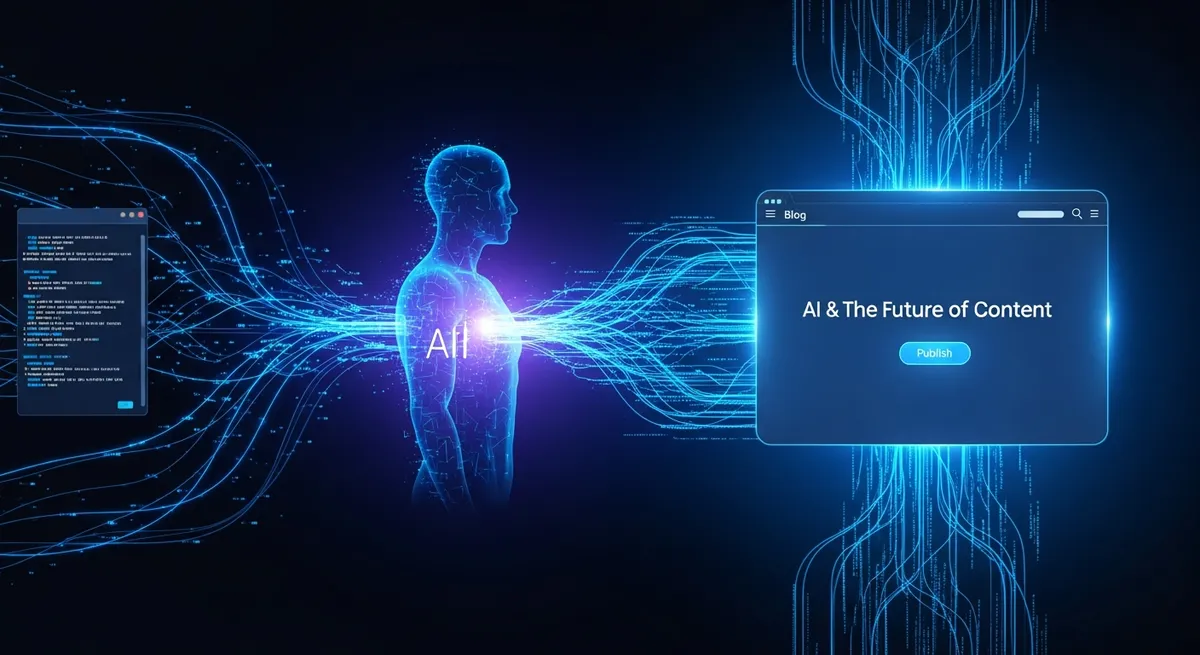
WordPress.com now supports MCP, letting Claude and ChatGPT write and publish posts directly — and it changes the content game for developers who know what they're doing.

We tested Bolt, v0, Lovable, and Replit Agent on real projects. One ships production apps. One is a glorified deployment wrapper.

AI coding agents caused AWS outages. Amazon's fix: senior engineer sign-off. That's not a setback — it's how this should've always worked.

Grammarly's AI can now mimic your writing style — and it's doing it without asking, which should worry every developer who writes.

OpenAI just launched Codex Security and everyone's acting like vulnerabilities are solved — they're not, and here's why.

MacBook Neo launches at $599 with A18 Pro and Apple Intelligence — and it might be the most interesting budget dev machine in years.

Anthropic's new Remote Control mode lets you command Claude Code from your phone — your laptop runs the agent, you ride shotgun from the couch.
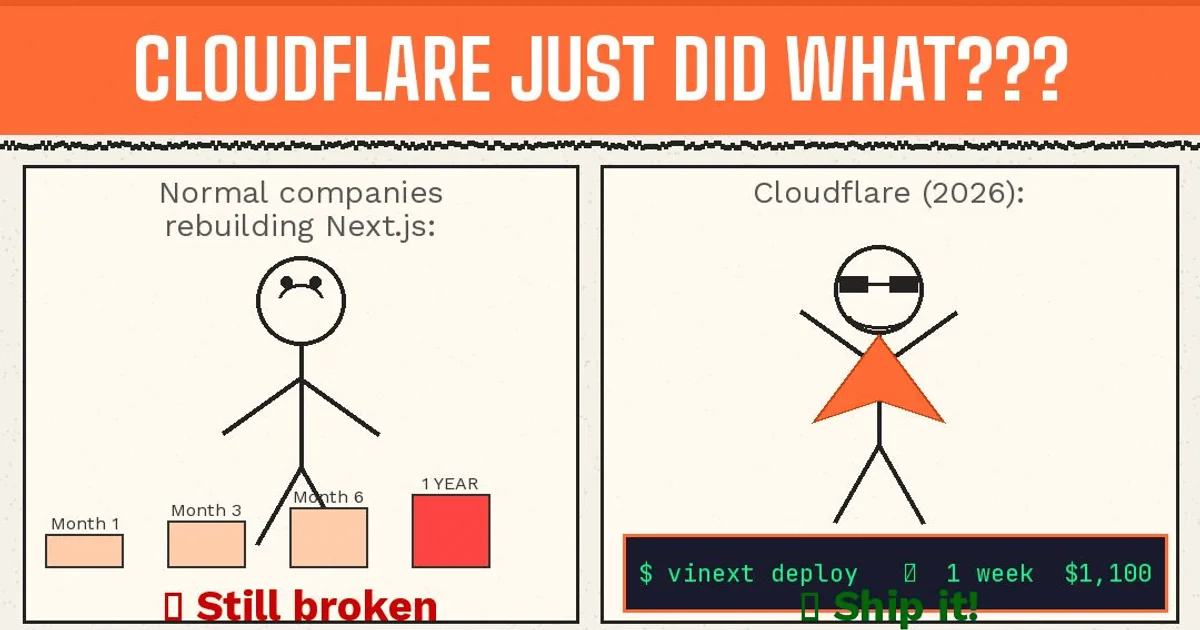
vinext replaces Next.js with Vite — built by one Cloudflare engineer in seven days. 4.4x faster builds, 57% smaller bundles.

Agent Teams vs subagent spawning: same problem, different tradeoffs. Pick wrong and your multi-agent workflow becomes a nightmare.